What Tradwives, Dating Apps, and AI Tell Us About Modern Relationships
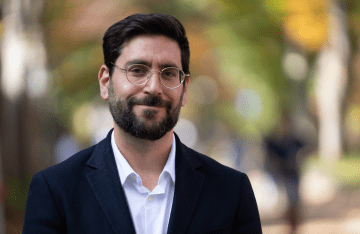
On the podcast Mirror Mirror, Dean Sarah Banet-Weiser explored how media, technology, and changing ideas about gender and intimacy are reshaping the ways we understand relationships and fulfillment.
In a recent episode of Mirror Mirror, host Amy Chang spoke with Dean Sarah Banet-Weiser about what contemporary media trends reveal about the cultural moment we are living through. Their conversation explored topics from tradwives and Love Island to dating apps and AI relationships, examining how these seemingly disparate phenomena reflect changing ideas about identity, gender, intimacy, and fulfillment. Together, they considered the ways media and technology shape our expectations of social life, and what may be lost when we try to make human relationships more efficient, predictable, and free of the friction and uncertainty that make them meaningful.
Below are excerpts from the conversation, which you can watch in full here:
“We watch media, different shows, whether or not they're fiction, you know, procedurals or sitcoms or documentaries or they're influencers or TikTok videos. We watch them and we're not ever passive consumers. So even though the mass absorbs the message, even before when there was much more of a singular broadcast model rather than, you know, the kind of model that we have now, we never just absorb the message. We took it in. We negotiated with it. We figured out what parts of those messages, what parts of those images fit our own lives. So media kind of creates the scripts that we end up living by.”
"To get back to the question about tradwives in the current context, I think we need to look at the broader cultural context. It is a really uncertain time. We know this. We're living in this moment in the United States. Economically, there are no guarantees. We're worried about everything from inflation to AI. So there's economic precarity in ways that feel very acute and are keenly felt. There is a real birth decline, and people are creating moral panics around that and what that means for society and what that means for the future."
“When I see that it's easier to have a relationship, an intimate relationship with AI than it is with an actual person, I feel like that is something that instead of just blaming that person for being, you know, attracted to AI, we need to think about what are sort of the cultural conditions that condition those choices that we make to go to AI —- because you're so afraid of failure or you need to be validated all the time. Because we're in this culture where perfection is what people are aiming for and that just doesn't make any sense to me. I don’t know anyone who’s perfect.”
“Technology makes things more efficient. And I think we need to stop equating efficiency with success. And it makes things smooth and easy. But falling in love, having children, having a fulfilling job are rarely smooth and easy. They depend on friction and messiness.”