
News
Find News

The FBI’s Secret Impact on American Broadcasting
A study of declassified FBI files documents how the Bureau wielded the fear of communist infiltration to infiltrate the broadcasting industry itself.

Most Americans Support Checks on Presidential Power
A new survey from the Annenberg Public Policy Center finds that a strong majority of Americans support the role of the courts and Congress in serving as checks on presidential power.
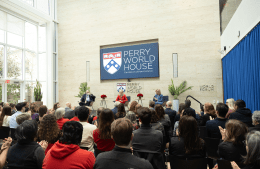
Penn Leaders-Turned-Diplomats Reflect on American Statecraft and Foreign Policy
In a conversation at a Perry World House event on ‘Common Sense Diplomacy,’ President Emerita Amy Gutmann and former trustee chair David L. Cohen shared insights and experiences.

Yphtach Lelkes Awarded 2025 Andrew Carnegie Fellowship
Lelkes will study how political hostility is shaped in an overloaded information environment.
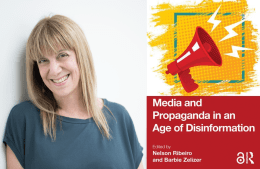
Q&A: Media and Propaganda in an Age of Disinformation
In a new book, Professor Barbie Zelizer, Universidade Católica Portuguesa Professor Nelson Ribeiro, and other communication scholars explore media and propaganda.
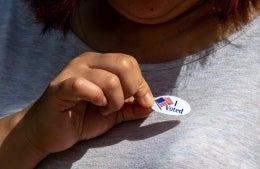
‘I Will Vote’: Using Future-Oriented Frames to Motivate Voters
A new study showed that exposure to “I Will Vote” stickers significantly enhanced people’s attitudes toward voting, as opposed to “I Voted” and “I Will Vote” stickers.

New Research Explores How Volodymyr Zelensky’s Public Persona Shaped Early Narratives of the Russia-Ukraine War
New research from Annenberg doctoral candidate Liz Hallgren analyzes Western media’s fascination with Volodymyr Zelensky in the early months of the Russia-Ukraine war.

A New Study Uncovers How Information Spread on Facebook in the Lead up to and After the 2020 Election
Professor Sandra González-Bailón and colleagues analyzed the spread of over one billion Facebook posts to reveal how information flowed on the social network.

Balancing Quantity and Quality: How X/Twitter’s Algorithm Influences Our Consumption of News
A new paper by Penn researchers, including Annenberg doctoral candidate Shengchun Huang, explores the dissemination of news on X/Twitter.
New Study Reveals Democrats and Republicans Vastly Underestimate the Diversity of Each Other’s Views
A new study by Annenberg researchers has found that Democrats and Republicans consistently underestimate the diversity of views within each party on hot-button issues like immigration and abortion.
Stay Engaged with Annenberg
Sign up for our monthly newsletter, Annenberg NOW, and occasional updates on events, news, and more.