

Media Mappers on the Globe
- Annenberg School for Communication, 3620 Walnut Street
- Room 500 & Plaza Lobby
Join us for a mini-symposium showcasing the Media Mapper, a geospatial visualization tool developed with support from the Center for Advanced Research in Global Communication.
About the Event
CARGC postdoctoral fellow Ennuri Jo will introduce the Media Mapper tool and its flagship project, Aqueous Earth Catalog, which maps bodies of water around the world that are significantly referenced in or featured in films and video texts. Jo will be joined by Liang Wu (Postdoctoral Associate, Cornell University) and Weilin Zhu (Ph.D. Student, University of Virginia), who will each present how they use the Media Mapper to support their own research in global media studies.
Media Mappers on the Globe is the result of a larger workshop series. Media maps created by other participants of the workshop will be shared online prior to the event on the Media Mapper website (mediamapper.app).
Media Mapper is an open-source application that anyone can use and modify. Come learn about and contribute to these media maps and find out how you might create your own.
Schedule
9:30 – 10:00 AM | Breakfast
Location: Room 500
10:00 – 10:15 AM | Opening Remarks
Location: Room 500
- Ennuri Jo, Postdoctoral Fellow at the Center for Advanced Research in Global Communication (CARGC)
Media Maps will be live on mediamapper.app for everyone to explore
10:20 AM – 12:00 PM | Presentations and Q&A
Location: Room 500
- Liang Wu, Postdoctoral Associate, Cornell University
Rendering the Logistical Ocean: Media, Mapping, and the Politics of Maritime Visibility and Knowability - Ennuri Jo, Postdoctoral Fellow at the Center for Advanced Research in Global Communication (CARGC)
Aqueous Earth Catalog - Weilin Zhu, Ph.D. Student, University of Virginia
Learning Machine: Constellation of Propagation
12:00 – 1:00 PM | Lunch
Location: Plaza Lobby
About the Speakers
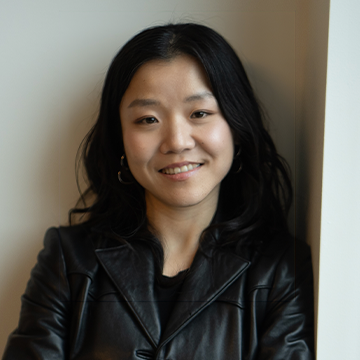
Speaker: Ennuri Jo
Presentation Title: Aqueous Earth Catalog
Speaker Bio: Ennuri Jo is a Postdoctoral Fellow at CARGC. She is working on her first book manuscript that explores the relationship between water and world cinema, and an accompanying digital humanities project, the Aqueous Earth Catalog.

Speaker: Liang Wu
Presentation Title: Rendering the Logistical Ocean: Media, Mapping, and the Politics of Maritime Visibility and Knowability
Speaker bio: Liang Wu is a Postdoctoral Associate of Environmental Humanities, and International Studies, and Science and Technology Studies at Cornell University. Since 2006, through multisited ethnographic fieldwork onboard vessels and at ports across Asia and the United States, Wu has been examining the shipping and seafaring industry that carries 90% of international trade and sustains societies around the world. Wu previously served as a Marine Policy and Science Communication Knauss Fellow at NOAA Ocean Exploration. His current post-PhD research investigates the socio-environmental dimensions of emerging technologies of shipping decarbonization in the “4th Propulsion Revolution.” His interdisciplinary and intersectoral scholarship thus bridges social oceanography, blue humanities, maritime economy, and marine policy, shedding light on the underexamined aspects of oceanic globalization and the human condition.

Speaker: Weilin Zhu
Presentation Title: Learning Machine-Constellation of Propagation
Speaker Bio: Weilin Zhu (she/her) is a Ph.D. student in Media Studies at the University of Virginia. Her research examines the history of computing, with particular attention to the development of computing technologies in post-socialist China, including microcomputers, educational learning machines, and bootleg game consoles in the emerging information era. More broadly, her research engages media infrastructure, science and technology studies (STS), digital humanities, artificial intelligence, and environmental humanities. She is currently researching early Internet and pre–World Wide Web network practices in 1990s China, focusing on alternative, non-PC computing platforms as localized sites of Internet access and use.
Events
View AllDisclaimer: This event may be photographed and/or video recorded for archival, educational, and related promotional purposes. We also may share these video recordings through Annenberg's website or related platforms. Certain events may also be livestreamed. By attending or participating in this event, you are giving your consent to be photographed and/or video recorded and you are waiving any and all claims regarding the use of your image by the Annenberg School for Communication. The Annenberg School for Communication, at its discretion, may provide a copy of the photos/footage upon written request.