

How #ChristianTikTok Users Understand and Utilize the Platform’s Algorithm
A new study reveals the different ways an online religious community negotiates their place in a digital space.
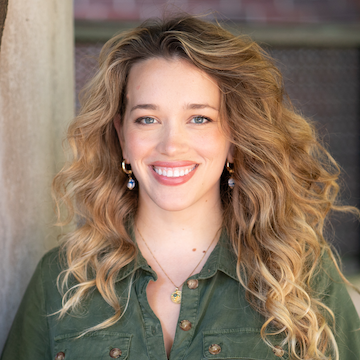
New research from doctoral student Sara Reinis and alum Corrina Laughlin (Ph.D. ‘18) analyzed over 500 videos from Christian TikTok users to investigate the phenomenon of spiritual conceptualizations of social media algorithms.
Their paper, published in New Media & Society, reveals the different ways Christian TikTok users view their place on a platform that controls their visibility and the ways they interact with this hidden force.
Some see the TikTok recommendation algorithm as existing in an “unseen” realm. Subsequently, according to the researchers, some of the Christian imaginary surrounding the algorithm frames algorithmically determined visibility as a direct expression of God’s will.
For others, boosting the visibility of these videos, whether directed by the hand of God or not, is seen as a spiritual obligation. “This framing takes tenets of algorithmic optimization found in social media marketing guides and turns them into moral mandates in a grand landscape of spiritual warfare,” wrote Reinis and Laughlin in their co-authored article.
The potential to boost the visibility of Christian content to TikTok users through its algorithm is a feature that’s negotiated in different ways on Christian TikTok. Using the concept of “context collapse” on social media, Reinis and Laughlin showed how the “memefication” of their content by outsiders — for instance, when it reaches “the bad side of TikTok” where non-Christian audiences reside — can be an evangelizing opportunity. “It’s exactly why we’re here,” one TikToker says, “to be the light for the lost.”
However, Christian TikTok also sees the algorithm as an oppositional force. While some see it as a tool for spreading the word of God, others portray the platform as part of the broader “mainstream media” ecosystem, which they believe actively persecutes and suppresses Christians, the authors noted.
This, however, can help users frame their own spiritual brand: “If the worldly algorithm hates them, they must be on the right track, their thinking goes,” said Reinis and Laughlin.
Since the publication of the study, Reinis has continued to study religious content on TikTok. In a paper in the International Journal of Communication, “TikTok Is One Long Conversation With the Universe: How Platform Affordances Shape Emerging Spirituality Across TikTok Manifestation Content,” Reinis expanded her research into the platform and made the argument that manifestation content further reveals how the performance of spiritual beliefs is becoming enmeshed with new media technologies.
“After writing this first article, I was struck by how remarkably similar the discourse was in the New Age space. In addition to #ChristianTikTok, the tendency to spiritualize one’s encounters with the algorithm was also pervasive across ‘manifestation’ content,” she said. “Across these two case studies, a shared phenomenon became increasingly clear: the features of the TikTok platform are becoming thoroughly intertwined with our modern spiritual landscape.”
