
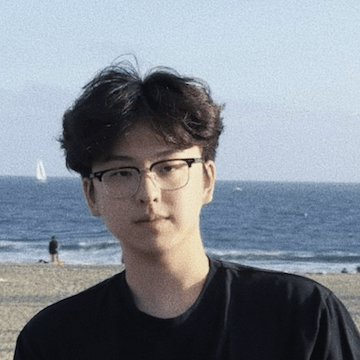
Yiheng Zhang
- Doctoral Student
Yiheng Zhang studies how violent media and platform design influence youth behavior and emotion, using mixed methods to explore social media addiction, online aggression, and public responses to AI-generated news content.
Yiheng Zhang is a first-year Ph.D. student at the Annenberg School for Communication at the University of Pennsylvania. His research focuses on the psychological and behavioral impacts of digital media, particularly among youth and marginalized populations. Bridging media psychology and communication theories, Zhang investigates how emotional states interact with digital platform architectures to influence patterns of social media addiction, cyberbullying or FoMO.
His work applies quantitative and qualitative approaches and netnographic inquiry, to examine how violent media content shapes users’ emotional responses and behavioral outcomes. Zhang is especially interested in how exposure to digitally mediated aggression, discursive conflict, and algorithm-amplified hostility influences user engagement and attitudes toward real-world violence. He explores how social media platform contents interact with user psychology to reinforce or disrupt harmful behavioral patterns. His broader goal is to inform theory-driven interventions and public communication strategies that mitigate the negative effects of violent media exposure and promote healthier digital environments for young people.
His current project investigates public discourse surrounding AI-generated violent news content. Using TopicGPT for thematic and sentiment clustering, the study analyzes online comments under mainstream media coverage to reveal dominant audience attitudes—such as fear, curiosity, skepticism, and acceptance—toward AI-generated narratives of violence. This research contributes to the understanding of how algorithmically produced news content is negotiated in public spheres and how digital audiences process technological interventions in journalistic storytelling.
Zhang holds a B.A. in Communication and Media (High Distinction) from the University of Michigan and an M.A. in Communication from Johns Hopkins University. His research has been presented at major academic conferences such as the International Communication Association (ICA) and WORLDCMC, and published in peer-reviewed journals including Frontiers in Psychology and Interdisciplinary Humanities and Communication Studies.
Education
- B.A., University of Michigan, 2024
- M.A., Johns Hopkins University, 2025