
The Rage of Tradwives
In a new paper, Dean Sarah Banet-Weiser and doctoral student Sara Reinis analyze popular “tradwife” accounts on Instagram and TikTok.
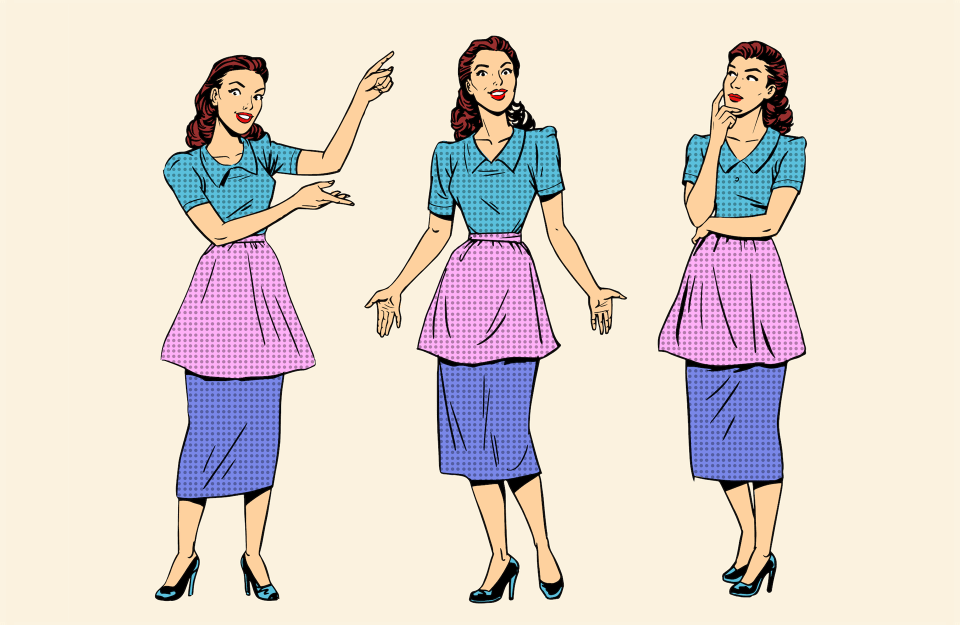
Frilly aprons, spotless kitchens, and homemade bread fresh out of the oven are some of the hallmarks of the online tradwife movement. Tradwives (short for “traditional wives”) document their lives on Instagram and TikTok, calling for a return to “simpler times,” but a powerful emotion simmers beneath the surface: rage.
In a new paper, “The rage of tradwives: Affective economies and romanticizing retreat,” published in Feminist Theory, Sarah Banet-Weiser, dean of the Annenberg School for Communication, and Sara Reinis, doctoral student at the Annenberg School, analyze tradwives' dissatisfaction with women’s place in society that mirrors feminists’ frustration with living within a patriarchal and inequitable system.
“Tradwives perform serenity, but their message is often fueled by a quiet fury — not against patriarchy, but against feminism’s perceived failures,” Banet-Weiser says. “What’s striking is that the issues they point to — hustle culture, the lack of care infrastructure, and the devaluation of reproductive labor — are the very concerns mainstream feminism also addresses. Both groups are responding to the same broken system, but in very different ways. While each is rooted in women’s rage, the direction and consequences of that rage diverge sharply.”
From April to September 2024, the researchers analyzed 50 accounts across Instagram and TikTok that directly embrace the title of tradwife and create posts explicitly promoting a lifestyle characterized by “traditional gender roles.” In analyzing this content, Banet-Weiser and Reinis document the many ways that tradwives and feminists mirror one another: each group frustrated with gender inequalities, but each advocating a radically different solution to these realities.
Rejecting Hustle Culture
One common theme on the tradwife accounts is the rejection of hustle culture, a phenomenon they attribute to feminism itself rather than a capitalist appropriation of feminist language
On many tradwife accounts, feminism is presented as a nefarious force pushing women into a hostile labor force. In a tradwife influencer’s caption on a video of her making pasta from scratch, she writes, “There are more options than being enslaved to corporate life and modern feminism...” In another video, a tradwife influencer tells the camera, “As a woman, I was lied to. I was taught my value was found in a workplace serving a boss and others.”
Taking up a “traditional” life is presented as freedom by tradwives, even when their content extols the importance of “serving” a husband or children, the researchers point out. “Such claims paint submission to some male force, whether it be a boss or a husband, as inevitable,” says Reinis, “In an ironic twist on classic feminist critiques of women's value being tied to subservient roles, many creators leverage the same critique to paint full-time work as another mode of thankless servitude.”
Fighting the Dismissal of “Women’s Work”
Coupled with this pushback on corporate hustle culture, tradwives also rage against society’s devaluing of “women's work” in the home, a critique that has long been a central tenet of feminist thought, the researchers say.
Many tradwife influencers demand acknowledgment for the unpaid work of being a homemaker and mother. “Being a housewife is honorable, and worthy of respect, vital to the functioning of society,” one influencer writes.
Feminists agree with this sentiment, Banet-Weiser says, and have been arguing it for years. She and Reinis cite the 1970s “Wages for Housework” feminist movement, which called for domestic work both inside and outside the house to be acknowledged and compensated.
While tradwives ask that domestic labor be recognized as labor, many also describe it as a divine calling, a duty that women are destined to perform, paid or not, and blame feminism for “degrading motherhood,” the researchers note. “It's obvious that the women who founded the feminist movement did not value motherhood nor see it as a legitimate contribution to society…neither does feminism today,” an influencer says in a video.
“From this ahistorical and misconstrued vantage point, embracing traditional gender roles is the only space where reproductive labour enjoys the honored status it deserves,” Reinis says. “In the mirror world of tradwives, feminism is construed as a force that pushes domestic labor into the sphere of unimportance and invisibility.”
Addressing a Broken Care System
Tradwives cite the lack of comprehensive maternity leave policies and astronomical childcare prices in the U.S. as another reason to justify their lifestyle, Banet-Weiser and Reinis say. But rage at this crisis of care is a core pillar of many feminist movements, they argue: feminists want all families to have access to affordable care, whether or not they live “traditional” lives.
“The material and economic conditions for parents in the U.S. are woefully inadequate,” Banet-Weiser says. “From the tradwife perspective, this is fodder to advance their argument that women belong in the home, but for many feminist movements, it is a reason to insist on interdependencies rather than individualism, to push for federal maternity leave policies, universal pre-K, or childcare subsidies.”
Tradwives see fighting for these changes as unnecessary as long as the tradwife movement catches on. In one video, a tradwife tells the camera, “We don’t need more affordable childcare. We need more moms staying home and dads supporting it.” Another influencer claims that “daycare is a way to disassociate mother & baby, and destroy the family unit.”
A Path to Happiness
A key component of tradwife content is emphasizing a life of domestic happiness — one of smiling children, bucolic homesteads, and beautiful clothing — in opposition to unhappy feminist “girlbosses.”
“Despite their commonalities, the tradwife movement attempts to position itself in stark contrast to rage-filled feminists,” Banet-Weiser says. “They tap into sources of shared rage, like expensive childcare and career burnout, and then show two paths diverging: that of the bitter, miserable feminist and that of the relieved, happy tradwife. In this way, tradwife content attempts to produce a fantasy of life without rage, and to place rage beyond its boundaries as the burden of feminists who refuse to submit and surrender.”
This performance of happiness obfuscates tradwives’ rage, the researchers say, a rage that tradwives hold not against patriarchy or systemic conditions harming them and their families, but against feminism itself.


